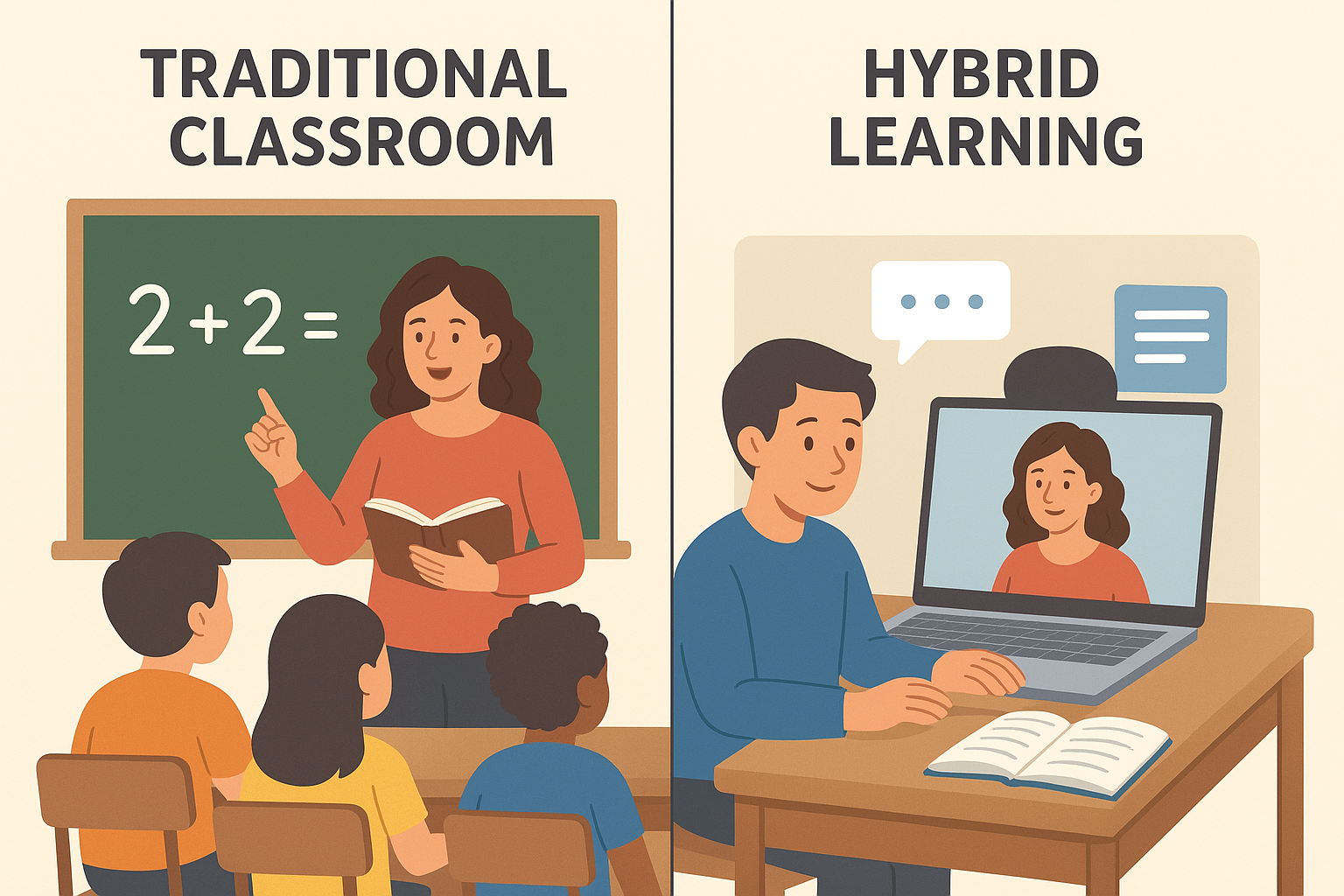
Here is a critical overview of Hybrid Learning vs Traditional Classroom, looking at What Works Better. Don't forget to share your thoughts in the comments section below 👇
Introduction to Hybrid Learning and Traditional Classroom
In contemporary education, two predominant pedagogical frameworks are gaining attention: hybrid learning and traditional classroom learning. Each approach serves distinct student needs and reflects evolving educational paradigms. Traditional classroom learning, often characterized by face-to-face instruction in a physical space, emphasizes direct interaction between teachers and students. This model facilitates a structured learning environment that fosters engagement, collaboration, and immediate feedback. Students benefit from the social dynamics inherent in this model, which can enhance peer learning and relationship building.
On the other hand, hybrid learning is an innovative educational model that combines in-person instruction with online elements. This approach allows students to partake in classroom activities while also engaging in self-paced learning through digital platforms. Hybrid learning aims to harness the advantages of both traditional and online modalities, providing a flexible, individualized learning experience. Essential components of hybrid learning include a combination of synchronous and asynchronous lessons, where teachers may deliver lectures in person while assigning online discussions or activities for follow-up learning.
The relevance of both learning methodologies has grown significantly in today's educational landscape, especially in light of recent global events that have propelled the need for remote and flexible learning options. The technological advancements in educational tools have amplified interest in the potential of hybrid models to enhance student engagement and accessibility. As institutions seek to accommodate diverse learning preferences and scenarios, the evolution from solely traditional classrooms to hybrid environments is becoming a salient trend. This shift will be explored in detail, paving the way for a comprehensive comparison of these two educational strategies.
Understanding Hybrid Learning
Hybrid learning has emerged as a transformative educational approach that combines traditional face-to-face instruction with online learning elements. This versatile method can take different forms, primarily categorized into blended learning and fully online courses. Blended learning typically involves a structured combination of in-person sessions and digital components, allowing educators to utilize the best of both worlds. In contrast, fully online courses can offer complete educational experiences via digital platforms, enabling students to learn at their own pace and convenience.
The benefits of hybrid learning methodologies are becoming increasingly evident in contemporary education. Research shows that students engaged in hybrid learning often exhibit greater motivation and improved academic performance compared to their peers in traditional classrooms. A study conducted by the U.S. Department of Education reveals that, on average, students in hybrid learning environments performed better than those receiving only face-to-face instruction. This suggests that the integration of technology into the learning process can enhance retention and understanding of the material.

Engagement is yet another critical aspect in which hybrid learning seems to excel. By incorporating digital tools such as discussion forums, interactive quizzes, and multimedia resources, educators can foster a more engaging and collaborative atmosphere. This shift towards a blended approach not only caters to various learning preferences but also prepares students for a technology-oriented world, where skills in navigating digital platforms are increasingly essential.
Additionally, hybrid learning facilitates adaptability. Whether through emergency situations such as natural disasters or ongoing challenges like the COVID-19 pandemic, the flexibility offered by hybrid models allows educational institutions to maintain continuity in instruction. As a result, students can remain engaged and continue their studies, regardless of external circumstances. Hence, hybrid learning emerges as a compelling alternative that caters to the evolving needs of modern learners.
Overview of Traditional Classroom Education
Traditional classroom education has long been a central pillar of learning, characterized by its structured environment, set curriculum, and face-to-face interaction between teachers and students. This educational model typically involves students gathering in physical classrooms where a teacher delivers content, facilitates discussions, and assesses understanding through various forms of evaluation. Over the years, traditional education has evolved from basic rote learning and memorization techniques to more interactive and engaging teaching methods that promote critical thinking and practical application of knowledge.
The historical context of traditional education reveals its deep-rooted origins, often traced back to ancient civilizations. Institutions such as schools and universities have developed frameworks that prioritize teacher-led instruction and standardized curricula. These frameworks are designed to ensure students acquire essential knowledge and skills, laying the foundation for further education or professional pursuits. The traditional model emphasizes the importance of social interaction among students, fostering a sense of community and collaboration that is often regarded as a significant advantage of this learning paradigm.
Despite its advantages, traditional classroom education is not without its challenges, especially in the digital age. The rapid advancement of technology has highlighted limitations within conventional classrooms, such as the lack of individualized learning pathways and the growing need for flexible, adaptable teaching methods that cater to diverse learning styles. As the educational landscape shifts, traditional models must reassess their methodologies and embrace innovative approaches that incorporate digital tools and resources. Consequently, the debate surrounding hybrid learning versus traditional classroom settings continues to gain relevance, prompting educators to explore the most effective ways to enhance student engagement and knowledge retention.
Comparative Analysis of Learning Outcomes: Hybrid vs Traditional Classrooms
Understanding the learning outcomes associated with hybrid and traditional classrooms is vital for educators and institutions seeking to optimize their teaching strategies. Both educational models present unique advantages and challenges, which can significantly affect student performance and overall academic success. Hybrid learning, which combines online and in-person instruction, has gained popularity as an alternative to traditional classrooms, offering flexibility and personalized learning opportunities.
Research has shown that hybrid classrooms can enhance student performance by providing diverse learning resources and individualized pacing. A study conducted by the U.S. Department of Education indicated that students in hybrid environments often demonstrate improved comprehension of course material. The opportunity to revisit recorded lectures or access a wealth of digital content allows students to reinforce their understanding, thus contributing to higher retention rates.
On the other hand, traditional classroom settings offer a structured environment that may be conducive to certain learners. According to educational psychology experts, face-to-face interaction fosters a stronger sense of community and collaboration among peers, which can lead to better skill acquisition. In traditional classrooms, immediate feedback from instructors helps clarify misunderstandings in real-time, potentially enhancing the overall academic experience.
However, the distribution of learning outcomes can vary based on factors such as student demographics and learning styles. For instance, students who are self-motivated may thrive in a hybrid environment by utilizing independence to tailor their education. Conversely, those who prefer direct engagement with instructors might favor traditional classrooms, where immediate support is more accessible. Ultimately, the effectiveness of both educational approaches hinges on their adaptability to students' unique needs and preferences, impacting their success in mastering essential skills.
Engagement and Interaction in Learning Environments
Engagement and interaction play critical roles in the efficacy of learning environments, whether traditional classroom settings or hybrid learning models. In traditional classrooms, face-to-face interactions foster immediate feedback and dynamic discussions among peers and instructors. This immediacy enhances student engagement, as learners can quickly address misunderstandings or clarify concepts through direct dialogue. Moreover, the social presence of classmates often cultivates a motivational atmosphere, encouraging students to actively participate in collaborative activities.
On the other hand, hybrid learning environments blend online and offline interactions, offering unique advantages in terms of engagement. This model allows students to collaborate in virtual discussions, utilizing tools such as forums, video conferencing, and collaborative documents, which can enhance the depth of peer interaction. Additionally, hybrid environments often provide students with the flexibility to engage with content at their own pace, facilitating a personalized learning experience. However, the effectiveness of this interaction relies heavily on students being self-motivated and the design of the online components being engaging and interactive.
Feedback opportunities also differ between the two approaches. In traditional classrooms, instantaneous feedback from instructors can reinforce understanding and keep learners engaged. Conversely, hybrid models may offer a mixture of synchronous and asynchronous feedback mechanisms, which can either enhance or hinder student motivations depending on how effectively these tools are utilized. It is essential for educators to design structured interactions to ensure that both peer collaboration and instructor-student communications are robust and productive.
Ultimately, the level of engagement and interaction varies significantly across learning environments. Optimizing these dynamics is crucial for fostering motivation and enhancing learning success, regardless of the chosen model. Examining student preferences and ensuring that both traditional and hybrid approaches are thoughtfully implemented can lead to more effective educational experiences.
Flexibility and Accessibility: A Key Factor
Flexibility and accessibility are essential components in the realm of education, significantly influencing the effectiveness of learning experiences. Traditional classroom settings often have fixed schedules, which can pose challenges for students who balance academic responsibilities with work, family commitments, or other personal obligations. For these individuals, the structured nature of a conventional classroom may hinder their ability to engage fully in their studies, as it does not accommodate varying rhythms and learning preferences.
In contrast, hybrid learning presents a more adaptable approach, combining both in-person and online education. This model allows for a unique blend of synchronous and asynchronous learning opportunities, enabling students to access educational materials at their convenience. By offering this level of flexibility, hybrid learning effectively caters to diverse learning styles, fostering a more inclusive environment. Students can choose when and how they engage with course content, potentially enhancing their comprehension and retention of information.
Moreover, hybrid learning improves accessibility for different demographics, including working professionals, caregivers, and individuals with disabilities. Online components can eliminate geographical barriers, allowing learners from remote areas or those with transportation issues to access quality education. On the other hand, traditional classrooms may be limited in this regard, as they generally require physical attendance at a specific location. As education continues to evolve, the demand for flexible options that accommodate varied lifestyles and learning needs becomes increasingly apparent.
Ultimately, while traditional classrooms have their merits, the flexibility and accessibility offered by hybrid learning provide a compelling alternative that may better suit the diverse population of today’s learners. By embracing both models, educational institutions can create a more comprehensive and effective learning environment, ensuring that all students have the opportunity to succeed.
Technological Influence on Hybrid Learning
Hybrid learning, which combines both in-person and online instruction, has become increasingly viable in modern education due to advancements in technology. Digital tools and platforms are now integral to this approach, enabling educators to create interactive and engaging learning experiences. Video conferencing software, learning management systems, and collaborative applications have transformed the traditional classroom setting by making it adaptable to different learning needs and environments.
The role of technology in hybrid learning is multifaceted. For instance, digital platforms facilitate remote access, allowing students to participate in classes from various locations. This flexibility is particularly beneficial for non-traditional learners who may have job or family commitments. Furthermore, the integration of multimedia resources, such as videos, podcasts, and virtual simulations, enriches the learning experience, catering to diverse learning styles, including auditory, visual, and kinesthetic preferences.
Additionally, interactive content, such as quizzes and discussion forums, fosters real-time engagement between students and instructors. Such participation not only enhances understanding but also promotes community-building among learners, even when they are physically apart. As educators adapt their teaching methods to harness these technology-driven resources, they can provide a more personalized learning experience, tailoring content to meet individual students' needs.
Nevertheless, the reliance on technology in hybrid learning models poses certain challenges. Issues such as unequal access to reliable internet and devices can create disparities among students, potentially hindering learning outcomes. Furthermore, educators must continuously update their digital literacy to effectively utilize new tools and strategies in their teaching. This ongoing demand for technological proficiency can create additional stress for both students and educators alike.
In this dynamic educational landscape, it is clear that technology plays a pivotal role in shaping hybrid learning environments, making them more engaging and accessible, albeit with certain challenges that must be addressed for optimal effectiveness.
Cost-Effectiveness of Hybrid Learning vs Traditional Classroom
The cost implications of hybrid learning and traditional classroom settings are crucial factors influencing decision-making for educational institutions, students, and parents. Hybrid learning, which combines face-to-face and online components, can present significant cost advantages. For educational institutions, the necessity for physical infrastructure can be minimized, as the reliance on digital platforms reduces the need for expansive classrooms and facilities. This can translate into savings on utility bills, maintenance, and other related expenditures.
In terms of resources, hybrid learning often leverages digital tools that can be less expensive than traditional textbooks and printed materials. E-books, online resources, and learning management systems can significantly lower material costs, making them more accessible for students. Additionally, with hybrid learning’s flexibility, institutions may find it easier to accommodate a diverse student population, further enhancing resource allocation efficiency.
On the other hand, traditional classrooms usually require investments in physical infrastructures such as desks, chairs, and classroom technology. These upfront and ongoing expenses can be substantial, impacting the overall budget of educational institutions. Furthermore, schools typically face costs associated with staffing, including teachers' salaries, which can be influenced by student enrollment rates in traditional models. This is particularly relevant as fluctuating enrollment can lead to underutilization of resources.
For students and parents, hybrid learning can result in reduced commuting costs and related expenses since students spend less time traveling to and from educational facilities. This convenience may lead to more economical financial planning for families. However, parents must consider the costs of technology, such as devices and internet access, which are essential for hybrid education.
Ultimately, both models present unique value propositions in terms of cost-effectiveness, requiring stakeholders to weigh the long-term benefits and potential challenges when assessing the financial impact of hybrid learning versus traditional classrooms.
Conclusion: Which Model Works Better?
As the educational landscape continues to evolve, the debate between hybrid learning and traditional classroom settings remains pertinent. Each model presents distinct advantages and challenges that cater to diverse learner needs and preferences. Traditional classrooms offer a structured environment with direct interaction between students and instructors, fostering immediate feedback and social engagement. This model thrives on the established framework of synchronous learning, where students benefit from real-time discussions and collaborations.
On the other hand, hybrid learning incorporates the flexibility of online education, allowing learners to access materials at their convenience while still receiving in-person instruction. This model appeals to those who require more individualized pacing and personalized learning experiences. By leveraging technology, hybrid learning promotes inclusive education and accommodates a wider range of learning styles, thereby enhancing accessibility for various student populations.
However, the effectiveness of either approach depends significantly on the individual learner’s context and preferences. While some students may thrive in a traditional setting, others may find hybrid models better suited to their learning habits. Moreover, the increasing integration of technology in education suggests that hybrid learning will likely play a more prominent role in future curricula, catering to the demands of modern learners.
Ultimately, educational institutions should adopt a balanced perspective, recognizing that neither method is universally superior. Instead, a combination of both models may provide the optimal learning environment. The future of education appears to lie in adaptive frameworks that embrace both traditional and hybrid methodologies, ensuring that each learner's unique needs are met. As educators and policymakers navigate these evolving trends, a focus on flexibility, accessibility, and student-centered approaches will be crucial in shaping effective educational experiences.
Comments (0)
Leave a Comment