This is a comprehensive guide on how to choose the right short course for your career goals. Remember to drop your questions and suggestions in the comments below.
Introduction to Short Courses and Their Importance
Short courses are concise, focused educational programs designed to provide individuals with specific skills or knowledge in a relatively brief period. These courses typically vary in duration, often ranging from a few days to several weeks, making them a popular choice among busy professionals eager to enhance their career prospects without committing to long-term studies. The rise of short courses can be attributed to several factors, including the fast-paced nature of today’s job markets and the increasing demand for specialized skills.
One of the primary benefits of short courses is their inherent flexibility. They are designed to accommodate the schedules of working professionals, often available in various formats such as online classes, evening courses, or weekend workshops. This adaptability allows individuals to pursue further education while maintaining their current job responsibilities. Furthermore, many institutions offer certification upon completion, further enhancing one’s professional profile and potential for advancement.
Another significant advantage of short courses lies in their focus on skill acquisition. Unlike traditional degree programs, which cover a broad range of topics, short courses delve deeply into specific areas, allowing participants to gain targeted expertise. This specialization is particularly valuable in today's competitive landscape, where employers frequently seek candidates with particular competencies that align with evolving industry trends.
Moreover, short courses enable professionals to stay current with market demands by providing insights into niche areas. As industries continue to evolve, the need for ongoing education and skill development has never been more critical. By participating in short courses, individuals can gain the latest trends and techniques applicable to their fields, ultimately enhancing their employability and career trajectory.
Aligning Courses with Career Goals
Choosing the right short course requires a clear understanding of your professional aspirations and how they intersect with your current skills and knowledge. Begin by conducting a self-assessment to identify your career goals. Consider what areas of your profession you wish to advance in or new competencies you want to acquire. Developing a roadmap that outlines your short-term and long-term career objectives can be an effective way to clarify your aspirations and pinpoint the specific skills you need to acquire.

Once you have established your career objectives, research short courses that directly address the gaps in your knowledge or skills. Focus on courses that provide practical, applicable knowledge pertinent to your career field. For instance, if you aspire to advance in project management, look for short courses that cover essential methodologies, tools, and techniques used in that discipline. Ensure that these courses offer certifications or accreditation that are recognized within your industry, as this can significantly enhance your employability and professional credibility.
In addition, consider the mode of learning that best suits your lifestyle and learning style. There are various formats, including online, in-person, or hybrid courses, and each presents its own advantages. Online courses often offer greater flexibility, allowing you to learn at your own pace, while in-person courses might provide more opportunities for networking and hands-on experiences. Evaluate your preferences and choose a course format that helps you stay motivated and engaged.
Lastly, consult with mentors or professionals in your industry to gain insights on which courses are highly regarded or recommended. Their experience and perspective can provide valuable guidance in ensuring that your selected course aligns with your career aspirations and enhances your skill set effectively.
Researching Available Short Courses
Choosing the right short course for your career aspirations requires thorough research to identify the best options available. The first step is to explore various educational platforms and institutions that offer short courses. Numerous platforms, such as Coursera, Udemy, and LinkedIn Learning, provide a plethora of online learning opportunities tailored to diverse fields. These platforms often collaborate with esteemed universities and organizations, ensuring that the courses are of high quality and recognized by employers.
In addition to online options, local educational institutions, vocational training centers, and community colleges may also offer relevant short courses. Conducting a search for courses related to your specific career goals is essential. You can use search engines and social media platforms to inquire about the best providers in your area, focusing on institutions known for their comprehensive curriculum.
Another critical aspect of your research involves reading reviews and testimonials from past students. Websites such as Course Report and Trustpilot allow individuals to share their experiences and rate the course. This feedback can provide insights into the quality of the course materials, the expertise of the instructors, and the overall learning environment. It is advisable to look for courses with consistent positive feedback while also being wary of those with multiple negative reviews.
Furthermore, consider researching the course syllabus and delivery format. Understanding the topics covered, the duration, and the mode of delivery (such as live or recorded sessions) can help you gauge whether the course aligns with your learning style and existing commitments. Ultimately, conducting thorough research will empower you to select a short course that not only meets your career objectives but also enhances your skills and knowledge effectively.
Evaluating Course Content and Structure
When selecting a short course that aligns with your career objectives, the evaluation of its content and structure is paramount. A thorough analysis of the course syllabus allows you to ascertain whether the topics presented are relevant to your field and professional aspirations. Initially, review the course outline; this document serves as a roadmap detailing what the syllabus encompasses. Ensure that the subjects covered directly relate to the skills you wish to acquire or enhance.
Consider the practical components integrated into the course. Courses that offer hands-on training or project-based learning often provide more value, as they allow participants to apply theoretical knowledge in real-world contexts. Look for opportunities to engage in simulations, case studies, or collaborative work, as these elements can significantly enrich your learning experience and better prepare you for practical applications in your career.
The duration of the course is another critical factor to evaluate. Ensure that the length aligns with your availability and learning style. Some individuals may prefer condensed programs that deliver intense learning over a short period, while others may benefit from extended courses that allow for deeper exploration of the topics. Additionally, pay close attention to the course delivery methods. Determine whether the preferred format is live, which may facilitate interaction and immediate feedback, or recorded sessions that offer flexibility to learn at your own pace. With the increasing significance of blended learning environments, courses providing a combination of both formats may offer the best of both worlds.
Ultimately, a thoughtful examination of a short course's syllabus and structure will equip you with the necessary insights to make an informed decision. By prioritizing evaluating these factors, you can better align your educational pursuits with your career goals, leading to enhanced professional development.
Considering Accreditation and Recognition
When embarking on the journey to select a short course that aligns with career goals, the significance of course accreditation and institutional recognition cannot be overstated. Accreditation serves as a validation of the quality and standard of education provided by an institution. It ensures that the program meets specific academic and professional benchmarks and is often indicative of the institution's commitment to continuous improvement and adherence to industry standards.
To identify accredited courses, prospective students should look for institutions recognized by relevant accrediting bodies in their field of interest. Each profession may have its own set of accrediting organizations that evaluate educational programs, making it essential for individuals to research and ascertain the credibility of these entities. For instance, programs related to health, engineering, or education often require strict compliance with professional standards, and accreditation by recognized bodies enhances the value of the respective course.
The importance of accreditation extends beyond the course itself; it plays a pivotal role in shaping career prospects in an increasingly competitive job market. Employers frequently regard accredited qualifications more favorably, as they signify that an individual has received education that meets industry standards. Furthermore, certain professions mandate accredited courses for licensure or certification, making this factor a critical consideration in the selection process.
Additionally, when analyzing the reputation of an educational institution, aspects such as faculty qualifications, alumni success rates, and industry partnerships should be taken into account. These elements often reflect the institution's credibility and the potential benefits of its programs. By prioritizing accredited and recognized short courses, individuals can ensure that their educational investments translate effectively into career advancement.
Analyzing Costs and Return on Investment
When considering a short course as a means to advance your career, it is essential to thoroughly analyze the costs and potential return on investment (ROI). The first step in this evaluation is to establish a clear understanding of the financial implications involved in enrolling in such a program. This includes not only tuition fees but also additional expenses such as materials, travel, and accommodation, if required. By compiling a comprehensive list of these costs, individuals can create a clearer picture of their total financial commitment.
Moreover, exploring funding options is crucial for many prospective students. Various institutions and organizations offer scholarships, grants, and financial aid specifically designed to support those pursuing short courses. In addition, many employers provide assistance or reimbursement for educational expenses, particularly when the course aligns with professional development goals. It is advisable to investigate these possibilities, as they can significantly lessen the financial burden of further education.
Once a clear understanding of the costs has been established, the next step is to evaluate the expected ROI from completing the short course. This involves analyzing how the course can influence career advancement opportunities, salary increases, and overall job satisfaction. Researching industry salary benchmarks and speaking with professionals in the field can provide insights into potential pay increases that could result from acquiring the new skills or qualifications obtained through the course. Moreover, considering the long-term career benefits, such as enhanced employability and job security, is imperative when assessing the overall value of the investment.
Ultimately, by systematically analyzing costs and potential returns, individuals can make informed decisions regarding the pursuit of short courses, aligning them effectively with their career aspirations.
Seeking Recommendations and Networking
In the pursuit of selecting the appropriate short course to further one's career, the significance of networking and seeking recommendations cannot be overstated. Engaging with professional networks opens doors to invaluable insights and perspectives that can greatly inform your decision-making process. Leveraging platforms such as LinkedIn serves as an effective strategy for connecting with industry peers, mentors, and other professionals who may offer guidance on their experiences with various courses.
When networking, it is crucial to approach conversations with an open mind and a clear focus on your career aspirations. Initiate discussions about relevant courses or certifications within your professional circles. These interactions can lead to recommendations that highlight the effectiveness, relevance, and potential return on investment for certain programs. Colleagues and mentors who have previously undertaken similar courses can provide authentic feedback based on their experiences and the outcomes they achieved.
Furthermore, participating in industry-related groups and forums can enrich your understanding of the available short courses. Engaging in conversations within these communities allows for the exchange of information, enabling you to discover courses that are highly regarded by insiders. Additionally, seeking recommendations from professionals who have firsthand knowledge of the educational institution or platform offering the course can further enhance your confidence in your choices.
Another aspect to consider is the importance of verifying the credibility of the recommendations you receive. Conduct thorough research on suggested courses, paying attention to their curricula, instructor qualifications, and alumni success stories. This diligent approach ensures that the course you choose aligns with not only your professional goals but also industry standards and expectations. By effectively utilizing networking and recommendations, you can make a more informed decision about which short course will best support your career advancement.
Setting Realistic Expectations and Commitments
Choosing to enroll in a short course can be a significant decision in relation to one’s career trajectory. However, it is essential to set realistic expectations and commitments before making this choice, as this can greatly influence the experience and outcomes of the training. One primary factor to consider is the time commitment required by the course. Short courses vary in duration, ranging from a few days to several weeks, and understanding this scale is crucial. Assessing how much time you can realistically dedicate each week is vital for maintaining balance in your personal and professional life.
In addition to evaluating the length of the course, the workload must also be scrutinized. Each short course comes with its own demands, including reading materials, assignments, and possibly group work. Therefore, it is advisable to gather information about the course structure and the expected workload to determine if your current schedule allows for it. An ideal approach here is to create a preliminary schedule that integrates your existing commitments alongside the additional workload from the course.
Moreover, personal availability plays a significant role in determining the feasibility of participating in a short course. It is important to consider factors such as family responsibilities, workload at your job, and other ongoing commitments that could affect your ability to focus on studies. Evaluating your personal circumstances can provide insights into whether it is the right time to enroll in a course that aligns with your career goals.
Taking these aspects into account will ensure that the short course you choose aligns well with your capabilities and career aspirations, leading to a productive learning experience and effective skill development.
Conclusion: Making an Informed Decision
Choosing the right short course is a significant step towards achieving your career goals. Throughout this article, several critical factors have been discussed that can guide you in making an informed decision. Understanding your career aspirations and the relevance of the chosen short course to those goals is fundamental. Additionally, assessing the credibility of the course provider, evaluating course content, and considering delivery methods can impact the overall learning experience and its applicability to your career.
Moreover, it is essential to reflect on your learning style and how it aligns with the course format. For instance, some individuals thrive in an interactive, in-person environment, while others prefer the flexibility of online learning. In this context, acknowledging your preferences can enhance your educational journey and ensure that you select a course that resonates with your learning approach.
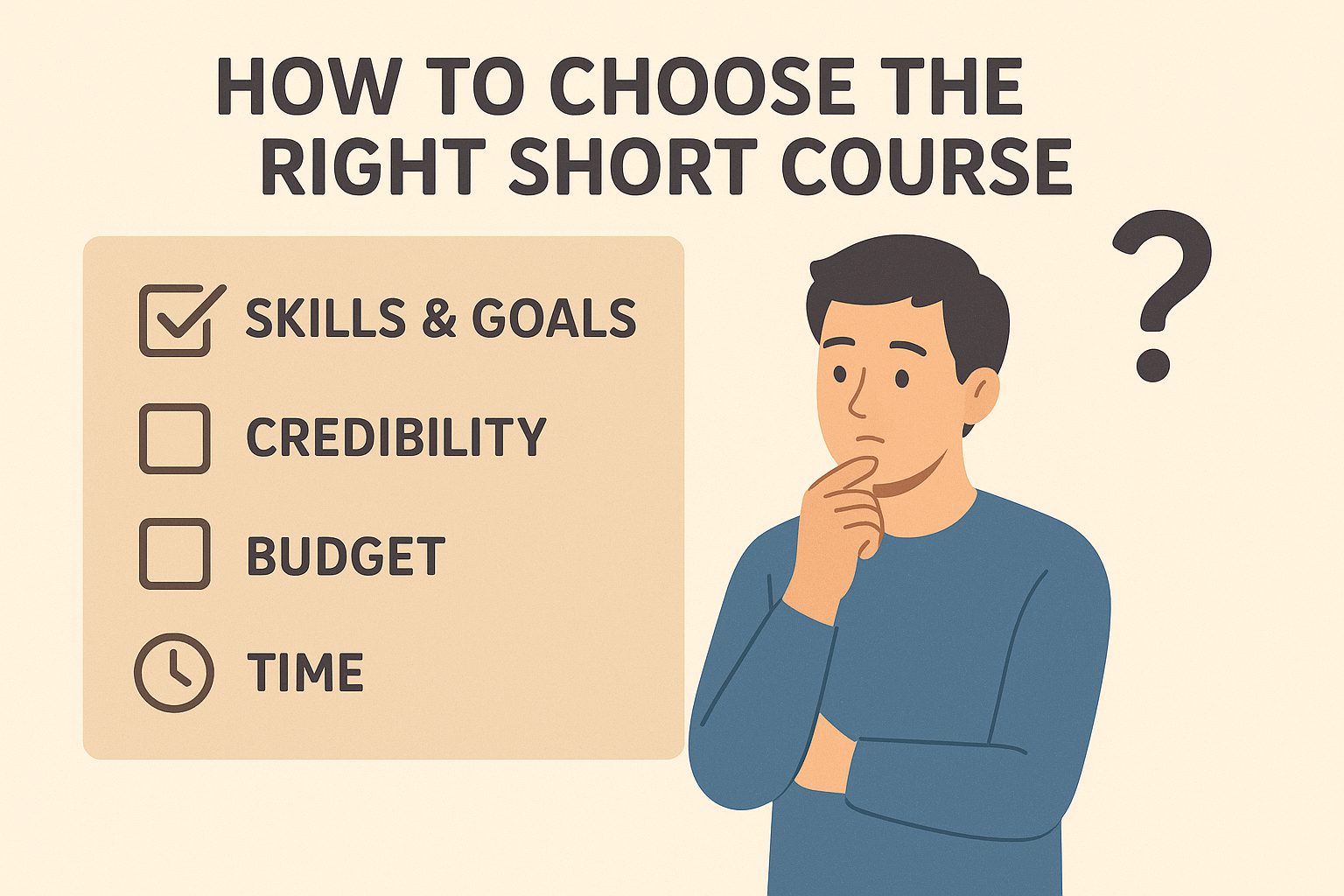
As you weigh your options, taking the time to compile a decision-making checklist based on the factors discussed can be invaluable. This checklist should include aspects such as alignment with career goals, course credibility, content relevance, delivery method, and feedback from past participants. By utilizing this structured approach, you can systematically evaluate each option, making the decision process more manageable and tailored to your specific needs.
Ultimately, the right short course can serve as a catalyst for professional development and can open new avenues in your career. Thus, it is advisable to approach this decision thoughtfully and thoroughly. In recognizing the importance of careful selection, you are more likely to choose a course that not only enhances your knowledge and skills but also propels you toward your future career ambitions.
Comments (0)
Leave a Comment